
European supply chains have become increasingly important for strategic procurement in recent years. Geopolitical conflicts, fluctuating transportation costs, and growing demands for transparency highlight the importance of reliable supply. Supply shortages can quickly become a problem, particularly for medical consumables such as disposable gloves.
More and more companies are therefore looking for ways to diversify their sourcing. European manufacturing facilities and regional raw material sources offer important advantages. They can shorten transportation routes, reduce dependencies, and make planning easier.
Nearshoring: Why Regional Supply Chains Are Becoming More Important
Nearshoring means relocating production or sourcing activities to geographically closer countries. For German buyers, this may involve sourcing more products from European manufacturers.
The reason is simple. Global supply chains often depend on long transportation routes, international trade routes, and numerous intermediate stages. Geopolitical conflicts or raw material shortages can affect the entire supply chain.
European supply chains can help reduce these risks. They do not necessarily replace international suppliers, but they provide additional sourcing options and reduce dependence on individual regions of the world.
What Are the Benefits of European Supply Chains for Procurement?
Greater Supply Security and Better Planning
Shorter transportation routes can reduce delivery times and make planning easier. Regional production also eliminates certain risks associated with long-distance overseas transportation.
This is particularly important for regularly needed products such as medical disposable gloves. A stable supply helps hospitals, care facilities, and distributors plan their inventory more effectively and avoid shortages.
However, the manufacturer’s location is not the only factor that matters. The origin of raw materials and the availability of essential intermediate products also play a crucial role.
Reduced Dependence on Global Risks
International supply chains are vulnerable to political conflicts, trade restrictions, and disruptions along important transportation routes.
The disruptions around the Strait of Hormuz in 2026 demonstrated how quickly such problems can arise. They affected important energy and raw material shipments and increased pressure on international supply chains. Such developments are particularly relevant to the chemical industry, as many products depend on petrochemical raw materials.
European raw material sources and manufacturing facilities can reduce dependence on these trade routes, although global risks cannot be eliminated entirely.
Greater Transparency and Easier Collaboration
Another advantage of regional supply chains is the geographical proximity between manufacturers and customers. Shorter distances make direct communication, production visits, and the clarification of quality-related questions easier.
This also makes it easier for strategic buyers to trace the origin of products and materials. This is particularly important when suppliers are evaluated not only on price but also on reliability and production conditions.
What Role Do Sustainability and ESG Play?
In addition to supply security, environmental and social standards are becoming increasingly important in procurement. ESG stands for Environmental, Social, and Governance, covering environmental responsibility, social responsibility, and responsible corporate governance.
European supply chains can offer advantages in this area as well. Shorter transportation routes can reduce transportation requirements, while proximity to manufacturing facilities makes it easier to obtain information about production conditions and raw material origins.
European production also provides opportunities to address factors such as energy consumption and the responsible use of raw materials more directly.
For buyers, transparent information and appropriate documentation are therefore particularly important when evaluating sustainability aspects during supplier selection.
Why the Entire Supply Chain Matters
A European business address does not automatically mean that a product is manufactured in Europe. Similarly, European manufacturers may depend on raw materials sourced from other regions of the world.
This can be seen in the production of nitrile disposable gloves. Their main material is nitrile butadiene rubber (NBR), which is manufactured from the chemical building blocks butadiene and acrylonitrile. These are produced through several upstream manufacturing processes.
Reliable supply therefore depends not only on where gloves are manufactured. The origin of raw materials and intermediate products should also be taken into account.
BISON Polymers manufactures nitrile disposable gloves in Germany and relies on European raw material sources. This approach combines regional production with shorter transportation routes and a more transparent value chain.
What Does This Mean for Strategic Buyers?
When selecting suppliers, buyers should increasingly consider supply capability, manufacturing locations, and raw material origins alongside price and product quality.
Identifying potential dependencies at an early stage is particularly helpful. An additional supplier, for example, offers only limited security if it relies on the same raw material sources or manufacturing facilities as the existing supplier.
Total costs also play an important role. A low unit price may become less attractive when long delivery times, high inventory levels, or urgent replacement purchases result in additional costs.
Conclusion: European Supply Chains Provide Greater Supply Security
European supply chains can make an important contribution to more stable and predictable procurement. Shorter transportation routes, regional raw material sources, and closer collaboration with manufacturers help reduce dependencies.
Long-term supply security depends on the entire supply chain. European manufacturing facilities, traceable raw material origins, and reliable supply capabilities provide a strong foundation and give buyers greater planning certainty.
Author
Andreas Zimmer
Social Media & Content Creator at BISON Polymers
Frequently Asked Questions About European Supply Chains
What Does Nearshoring Mean in Procurement?
Nearshoring refers to relocating sourcing or production activities to geographically closer countries. The aim is often to shorten transportation routes and reduce dependence on distant manufacturing locations.
Are European Supply Chains Generally More Secure?
European supply chains can reduce certain transportation and trade risks. However, their reliability also depends on the availability of raw materials, intermediate products, and production capacity.
Why Is Raw Material Origin Important in Procurement?
The origin of raw materials influences how dependent a product is on specific regions and transportation routes. Even with European manufacturing, shortages can occur if essential intermediate products are sourced exclusively from other regions of the world.
What Are the Benefits of European Supply Chains for Medical Consumables?
They can enable shorter delivery times, easier coordination with manufacturers, and greater planning certainty. These factors are particularly important for reliable procurement of regularly needed products such as nitrile disposable gloves.

Nitrile Disposable Gloves: Why Price Trends Matter in Procurement
A competitive offer is often a good reason to buy. Especially when it comes to disposable gloves, which are needed in large quantities every day, even small price differences can have a noticeable impact on purchasing budgets. Cost-effective procurement therefore...

Successful Kickoff to the BISON Matchdays at Sportfreunde Siegen
Successful Kickoff to the BISON Matchdays at Sportfreunde Siegen Siegen, October 21, 2026. With a 3–1 home victory against the previous league leaders, Rot-Weiß Oberhausen, Sportfreunde Siegen celebrated a successful kickoff to the BISON Matchdays on Saturday, October...

How Supply Chain Traceability Improves Product Safety
Product safety begins well before the finished product is tested. It also depends on whether raw materials, production steps and batches can be traced. Investigating quality deviations effectively requires knowing which materials went into which products. This view of...

How Nitrile Is Made: From Raw Materials to Disposable Gloves
Nitrile is widely used wherever reliable protection is needed, including in disposable medical gloves and occupational protective gloves. The raw material goes through several stages of petrochemical production before it becomes a finished glove. Fossil feedstocks are...
Starting Signal for Greater European Supply Security
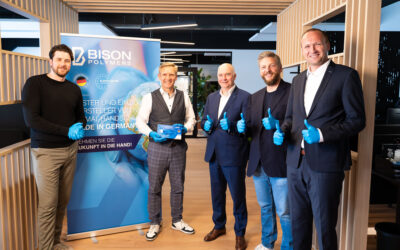
BISON Secures Financing to Expand Production of Nitrile Disposable Gloves in Germany Siegen, 13 May 2026. BISON Polymers GmbH, a German manufacturer of nitrile disposable gloves, is establishing industrial-scale production “Made in Germany” at its site in Siegen,...

Rossmann Expands Product Range with BISON Polymers’ “Made in Germany” Nitrile Disposable Gloves
GRIPGUARD Medical Now Available Nationwide – Strengthening Supply Security in the Consumer Segment Siegen, 22 April 2026. BISON Polymers GmbH, a German manufacturer of nitrile disposable gloves, is expanding its presence in the retail market: GRIPGUARD Medical nitrile...

Global Supply Chains Under Pressure: The Ever Given Incident
One ship runs aground across a canal, and trade around the world grinds to a halt. In March 2021, the Ever Given, one of the world's largest container ships, became stuck in the Suez Canal. It triggered a global supply chain crisis at a time when the COVID-19 pandemic...
Medical Students from University Hospital Bonn Visit BISON Polymers
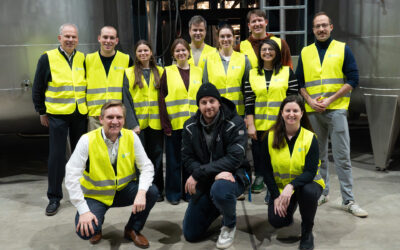
Insights into Glove Production in Siegen and Exchange on Sustainability in Everyday Clinical Practice Bonn/Siegen, 30 January 2026. On Friday, 23 January 2026, BISON Polymers welcomed nine students from the University of Bonn for a full-day visit to its production...

German Disposable Gloves from BISON Polymers Debut at MEDICA in Düsseldorf
At MEDICA, the world’s leading medical technology trade fair in Düsseldorf, BISON Polymers presented its new disposable gloves for the first time. Under the brand name PENTAGUARD, the company from Siegen is targeting hospitals, medical practices, care facilities, and...

BISON Polymers Unveils New Made-in-Germany Industrial Gloves at A+A 2025
BISON Polymers introduced a new brand of Made in Germany industrial gloves at A+A, the world’s leading trade fair for occupational safety and health in Düsseldorf. As the first and only German manufacturer of nitrile disposable gloves, the company focuses on supply...