
A competitive offer is often a good reason to buy. Especially when it comes to disposable gloves, which are needed in large quantities every day, even small price differences can have a noticeable impact on purchasing budgets. Cost-effective procurement therefore starts with carefully comparing offers.
However, an offer only reflects the prices and conditions available at a given time. Whether a supplier remains cost-effective over months or years also depends on price developments, agreed contract terms and supply reliability.
Recent years have shown just how significantly, and sometimes abruptly, market conditions can change. Price fluctuations should therefore be considered alongside product quality and supply reliability when making purchasing decisions.
How Much Can Glove Prices Fluctuate?
An analysis of Eurostat import data for rubber gloves entering Germany illustrates the scale of these changes. The figures show the average import value per kilogram, calculated by dividing the recorded import value by the net weight of the imported goods.
|
Period |
Average Import Value |
Change |
|
March to May 2020 |
€5.96 to €7.88/kg |
+32.2% |
|
August 2020 to May 2021 |
€7.67 to €17.03/kg |
+122.2% |
|
May to June 2026 |
€5.54 to €6.29/kg |
+13.5% |
The increase between August 2020 and May 2021 was particularly significant. Within just nine months, the average import value more than doubled. It then declined considerably in the following years. Between May and June 2026, another double-digit increase was recorded.
These figures do not represent prices for individual nitrile glove products. They cover different types of rubber gloves, including various materials and applications. Changes in the product mix can also influence the average values. Nevertheless, the data shows how significantly import values can fluctuate within this market segment.
For procurement teams, this highlights why it is important to consider potential price changes throughout the planned purchasing period, rather than focusing solely on the current offer.
Why Do Nitrile Disposable Glove Prices Fluctuate?
Several cost and market factors influence the price of nitrile disposable gloves. These include raw materials, energy, production capacity, demand, transport costs and exchange rates.
Nitrile rubber is made from petrochemical raw materials. Changes in their availability or cost can affect glove manufacturing costs. Energy consumption during production, packaging and logistics expenses also play a role.
Supply and demand are equally important. A sudden increase in demand or a reduction in production capacity can put pressure on the market. Conversely, additional production capacity and weaker demand may contribute to falling prices.
International supply chains introduce further factors, including freight rates, exchange rate movements and disruptions along transport routes. How quickly these changes affect purchasing prices depends partly on inventory levels and contractual agreements.
How Do Price Fluctuations Affect Procurement Budgets?
A low initial purchase price can reduce procurement costs in the short term. Whether this advantage continues throughout the purchasing period depends on future price developments and the terms of the contract.
A simplified hypothetical example illustrates the impact.
A buyer requires 10,000 boxes of gloves per month. At €2.50 per box, monthly expenditure amounts to €25,000. If the agreed purchase price increases by 20% after six months to €3.00 per box, annual costs rise from the originally budgeted €300,000 to €330,000.
This example is not a price forecast. It simply demonstrates how a price adjustment during the year can affect budget planning. Where a binding fixed-price agreement prevents such adjustments, the situation is different.
It is therefore important to assess not only the quoted price but also how long it remains valid and which contractual conditions apply.
The following questions can help when comparing offers:
- How long is the quoted price valid?
- Are price adjustments permitted, and under what conditions?
- Which quantities and delivery dates are contractually agreed?
- What additional costs could arise if replacement supplies are needed at short notice?
- How would total procurement costs change under different price scenarios?
Supply Security Has Economic Value
Price fluctuations and supply reliability should be considered together. If an agreed delivery is unavailable, buyers may need to source replacement products at short notice and potentially under less favourable conditions. Finding alternative suppliers, checking product suitability and adjusting internal processes can also create additional costs and administrative work.
Especially for medical consumables, demand cannot simply be postponed. Cost-effective procurement must therefore account for both regular purchasing expenses and the potential consequences of supply disruptions.
This requires a practical assessment of the risks involved, the protection provided by contractual agreements and the alternative sourcing options actually available.
Multiple Suppliers Do Not Automatically Mean Different Risks
Many procurement organisations already distribute their purchasing volumes across several suppliers. However, assessing supply risks requires looking beyond the individual companies.
If several suppliers source their gloves from the same production region or even the same factories, they may share similar dependencies. Common transport routes and raw material sources can mean that multiple suppliers are affected by the same disruption.
A reliable supplier mix therefore considers not only the number of suppliers but also the production locations and supply chains behind them. Additional supply security can be achieved when these structures genuinely differ and the required products and quantities have been qualified or agreed upon in advance.
What Role Can German Manufacturing Play?
Nitrile disposable gloves manufactured in Germany should also be considered when comparing offers. Whether a supplier is economically attractive depends on price, quality, delivery conditions and actual purchasing requirements. The production location alone says little about the overall cost-effectiveness of an offer. What matters is the complete package.
BISON Polymers manufactures nitrile disposable gloves in Siegen, Germany, using a European raw material base. This provides an additional manufacturing and sourcing option that can complement established international supply relationships.
For buyers in Germany, this structure can reduce dependence on intercontinental transport routes for finished gloves. It also allows procurement teams to include another production region in their sourcing strategy.
German manufacturers are also affected by changes in raw material and energy costs. Their contribution to risk diversification lies in reducing certain geographical and logistical dependencies. Price agreements and delivery commitments therefore remain essential when comparing suppliers, regardless of where production takes place.
Cost-Effective Procurement Means Looking Beyond Today’s Price
The purchase price remains a key factor in procurement decisions. However, the significant changes in import values demonstrate why long-term purchasing decisions should also consider price developments.
When comparing offers, buyers should use the same purchasing period, comparable products, agreed quantities and relevant price adjustment conditions. Scenarios involving rising or falling prices can also help illustrate the potential impact on budgets.
A German sourcing option can be a cost-effective addition to an existing supplier mix. Competitive procurement depends on the right balance of price, quality, predictability and reliable supply.
Would you like to complement your existing supplier mix with nitrile disposable gloves manufactured in Germany? Contact BISON Polymers to discuss your requirements and request a tailored quotation.
Data source: Eurostat, dataset DS-059341. Calculations based on import value and net mass for imports into Germany from all countries of origin. Commodity codes analysed: 401511 and 401519 up to and including 2021; 401512 and 401519 from 2022 onwards. Data retrieved on October 13, 2026. The figures represent average import values in €/kg, not a quality-adjusted price index or actual purchase prices for specific nitrile disposable gloves.
Frequently Asked Questions About Nitrile Glove Price Trends
Why Do Nitrile Disposable Glove Prices Fluctuate?
Prices are primarily influenced by raw material and energy costs, global demand, production capacity and transport expenses. Exchange rates and geopolitical developments can also contribute to price fluctuations.
How Do Price Fluctuations Affect Procurement Costs?
Even small price changes can result in significant additional costs when purchasing large quantities. Procurement budgets should therefore consider not only the current quoted price but also contract duration and potential price adjustments.
What Are the Benefits of Sourcing Nitrile Gloves from Germany?
A German sourcing option can complement international supply chains and reduce dependence on individual production regions and long transport routes. Combined with European raw material sources, German manufacturing can also contribute to greater predictability and supply security.
Why European Supply Chains Matter More for Strategic Procurement
European supply chains have become increasingly important for strategic procurement in recent years. Geopolitical conflicts, fluctuating transportation costs, and growing demands for transparency highlight the importance of reliable supply. Supply shortages can...

Successful Kickoff to the BISON Matchdays at Sportfreunde Siegen
Successful Kickoff to the BISON Matchdays at Sportfreunde Siegen Siegen, October 21, 2026. With a 3–1 home victory against the previous league leaders, Rot-Weiß Oberhausen, Sportfreunde Siegen celebrated a successful kickoff to the BISON Matchdays on Saturday, October...

How Supply Chain Traceability Improves Product Safety
Product safety begins well before the finished product is tested. It also depends on whether raw materials, production steps and batches can be traced. Investigating quality deviations effectively requires knowing which materials went into which products. This view of...

How Nitrile Is Made: From Raw Materials to Disposable Gloves
Nitrile is widely used wherever reliable protection is needed, including in disposable medical gloves and occupational protective gloves. The raw material goes through several stages of petrochemical production before it becomes a finished glove. Fossil feedstocks are...
Starting Signal for Greater European Supply Security
BISON Secures Financing to Expand Production of Nitrile Disposable Gloves in Germany Siegen, 13 May 2026. BISON Polymers GmbH, a German manufacturer of nitrile disposable gloves, is establishing industrial-scale production “Made in Germany” at its site in Siegen,...
Rossmann Expands Product Range with BISON Polymers’ “Made in Germany” Nitrile Disposable Gloves
GRIPGUARD Medical Now Available Nationwide – Strengthening Supply Security in the Consumer Segment Siegen, 22 April 2026. BISON Polymers GmbH, a German manufacturer of nitrile disposable gloves, is expanding its presence in the retail market: GRIPGUARD Medical nitrile...

Global Supply Chains Under Pressure: The Ever Given Incident
One ship runs aground across a canal, and trade around the world grinds to a halt. In March 2021, the Ever Given, one of the world's largest container ships, became stuck in the Suez Canal. It triggered a global supply chain crisis at a time when the COVID-19 pandemic...
Medical Students from University Hospital Bonn Visit BISON Polymers
Insights into Glove Production in Siegen and Exchange on Sustainability in Everyday Clinical Practice Bonn/Siegen, 30 January 2026. On Friday, 23 January 2026, BISON Polymers welcomed nine students from the University of Bonn for a full-day visit to its production...
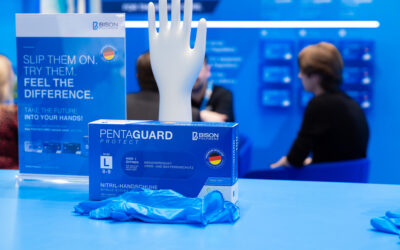
German Disposable Gloves from BISON Polymers Debut at MEDICA in Düsseldorf
At MEDICA, the world’s leading medical technology trade fair in Düsseldorf, BISON Polymers presented its new disposable gloves for the first time. Under the brand name PENTAGUARD, the company from Siegen is targeting hospitals, medical practices, care facilities, and...
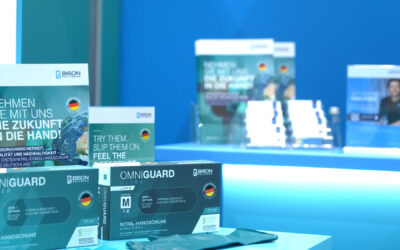
BISON Polymers Unveils New Made-in-Germany Industrial Gloves at A+A 2025
BISON Polymers introduced a new brand of Made in Germany industrial gloves at A+A, the world’s leading trade fair for occupational safety and health in Düsseldorf. As the first and only German manufacturer of nitrile disposable gloves, the company focuses on supply...